If you’re considering an autism assessment or ADHD assessment, you’re probably feeling a mixture of emotions – hope, nervousness, perhaps relief that you’re finally taking this step. One of the biggest barriers people face isn’t the waiting time or cost, but simply not knowing what to expect.
Will it be like an exam? Will I be judged? What if I don’t “perform” the right way on the day?
These worries are completely normal. That’s why we’ve created this guide to demystify the assessment process and help you feel prepared and confident.
Why Understanding the Process Matters
Many adults who eventually receive a diagnosis report that they delayed seeking help for years, partly because they didn’t understand what the process involved. Once you know what to expect, it becomes far less daunting.
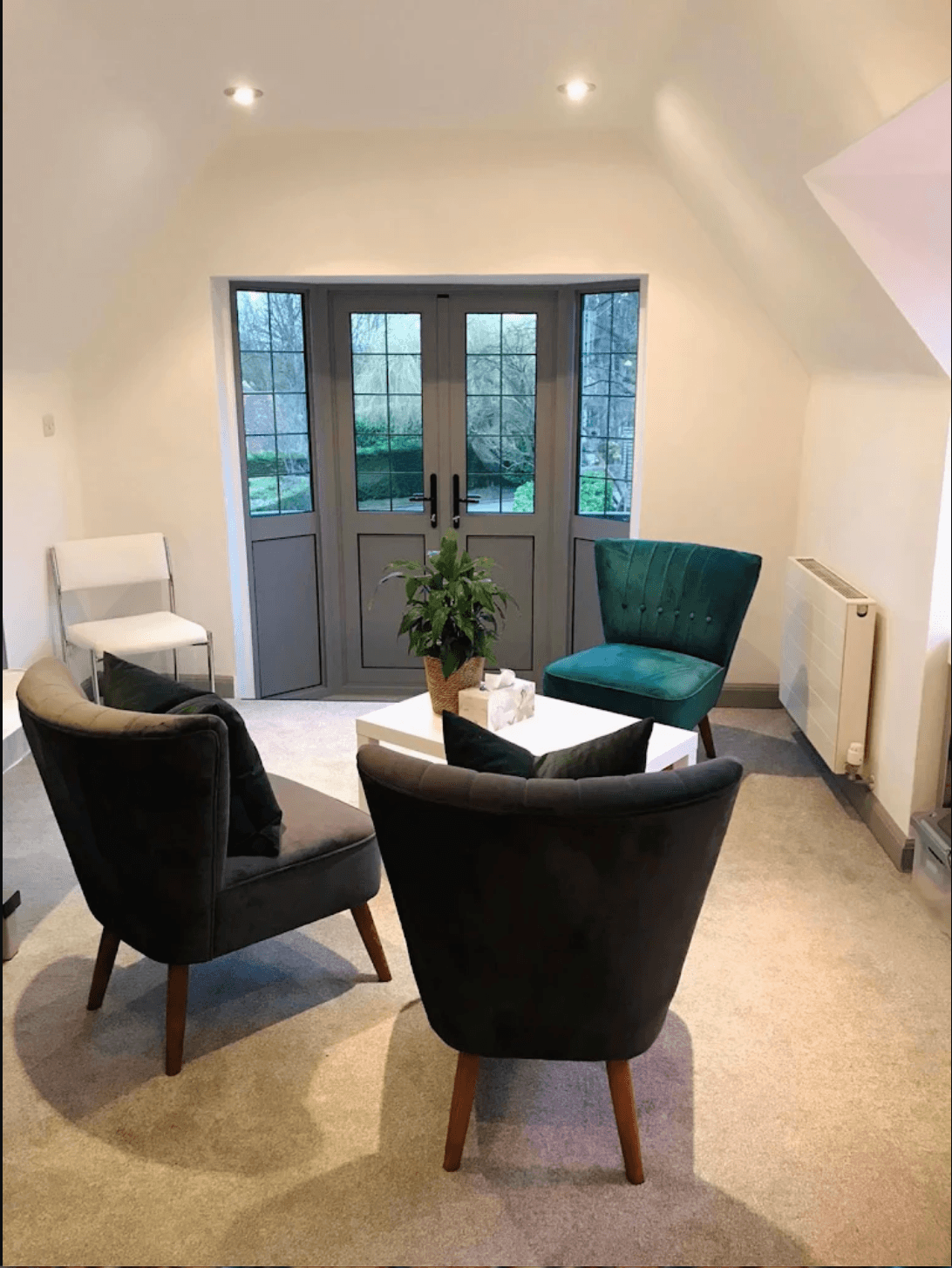
At Oxford Neurodiversity, we follow NICE guidelines to ensure our assessments are thorough and evidence-based. We know that coming for an assessment can be nerve-wracking, which is why we provide a friendly, welcoming environment at Raleigh Park clinic where you can feel comfortable throughout the process.
The Five Main Stages of an Assessment
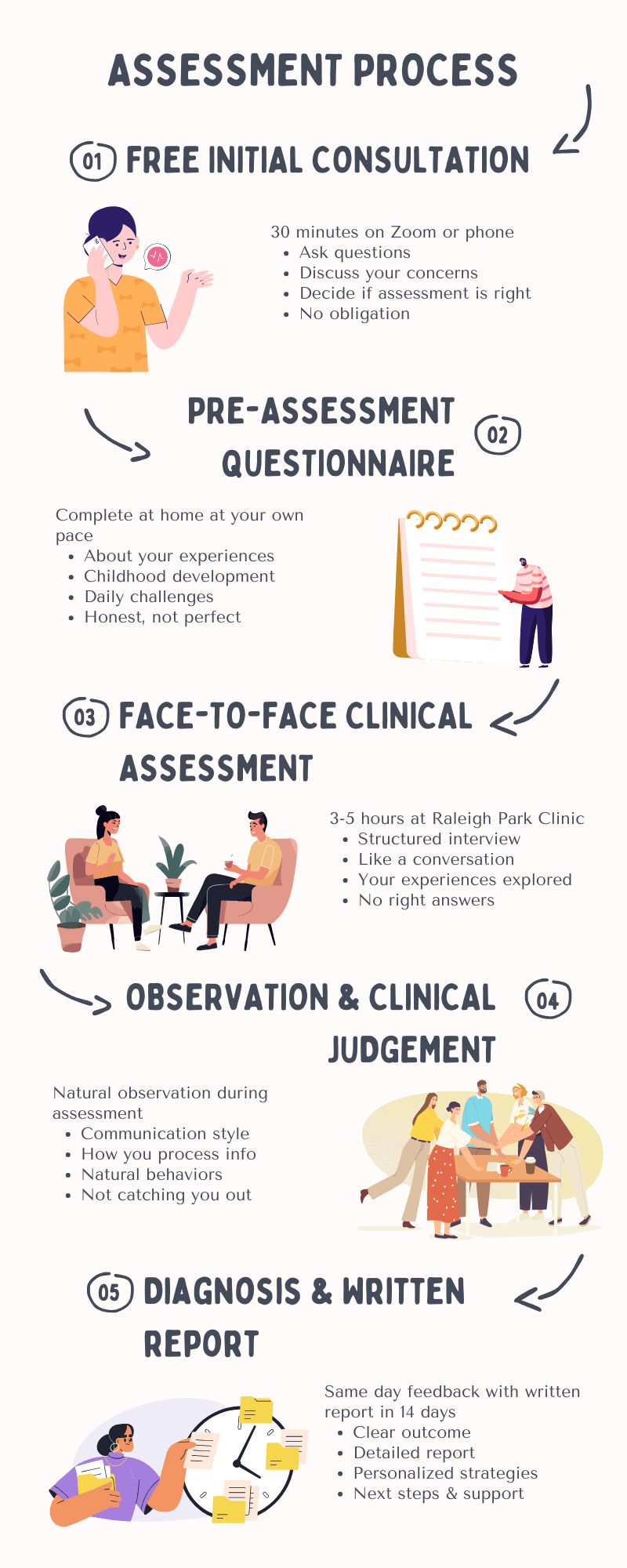
Stage 1: Free Consultation (30 minutes)
Before you commit to a full assessment, one of our clinicians will have an initial telephone/zoom call with you. This isn’t part of the formal assessment—it’s an opportunity for you to ask questions and ensure the assessment is right for you.
What we’ll discuss:
- Your main concerns and what’s prompted you to seek an assessment
- A brief overview of your experiences
- Whether an ADHD, autism, or dual assessment might be appropriate
- The process, timing, and costs
Top tip: Jot down your questions beforehand so you don’t forget anything important during the call.
Stage 2: Pre-Assessment Questionnaires
After your telephone/zoom consultation, we’ll send you detailed questionnaires to complete before your appointment. These aren’t tests you can pass or fail, they’re tools to help us understand your experiences.
What you’ll cover:
- Daily routines and organisation
- Relationships and social experiences
- Work or educational history
- Sensory sensitivities and preferences
- Family medical history
- Specific examples of challenges
For autism assessments: We’ll also ask someone who knew you in childhood to complete a developmental questionnaire.
For children’s assessments: Parents complete questionnaires about their child’s development. For children in schools we may also gather information from teachers with your permission.
Important: Give as much detail as possible with specific examples. You can’t answer “wrong”. We’re looking for honesty, not perfection.

Stage 3: The Face-to-Face Clinical Assessment
This is the heart of the assessment, taking place at our Raleigh Park clinic. It’s much more like a conversation than an interrogation.
What happens: Your clinician will ask detailed questions about your experiences across home, work, school and social situations. We use structured diagnostic interviews based on DSM-5 and ICD-11 criteria and may use tools like the ADOS-2 or ADI-R for autism assessments.
What we’re looking for:
- Patterns of behaviour that have persisted over time
- How symptoms affect your daily functioning
- Evidence across multiple settings
- Co-occurring conditions like anxiety or depression
- Your unique strengths as well as challenges
Common concerns addressed:
“What if I’m not struggling enough on the day?” We’re looking at long-term patterns, not just how you present in one appointment. Many neurodivergent people naturally mask, especially in clinical settings. We know this and take it into account.
“What if I can’t remember my childhood clearly?” That’s why we gather information from family members and review historical documents when possible. We also take in account our own observations.
“What if I get too anxious?” Let us know if you need breaks or any adjustments. We’re experienced in supporting people through the assessment process.
Important: There’s no need to prepare scripted answers. We’re trained to spot genuine presentations, including in people who mask.

Stage 4: Observation and Clinical Judgement
During your appointment, your clinician observes how you communicate, process information and respond to different questions naturally. This isn’t about catching you out, it’s about understanding your natural way of being.
For children: The assessment is tailored to be age-appropriate and engaging, often feeling more like playing and chatting.
For adults: Observation happens naturally during the interview – communication style, how you organize thoughts, responses to unexpected changes in conversation.
We also consider differential diagnoses being present, but only diagnose autism and/or ADHD on the day. Many conditions share symptoms with ADHD and autism, such as anxiety, trauma, depression, OCD, sleep disorders. Research shows up to 75% of autistic people experience co-occurring conditions. A thorough assessment considers your whole experience.
Important note: Finding you have anxiety alongside ADHD or autism isn’t a “failed” assessment, it’s valuable information that helps you access the right support.
Stage 5: Diagnosis and Feedback
At the end of your assessment day, you’ll receive a clear outcome and a brief discussion on what this means for you in going forward, plus a comprehensive written report within 14 days.
Your report includes:
- Whether diagnostic criteria are met
- Your specific profile of strengths and challenges
- Practical strategies tailored to your needs
- Recommendations for workplace or educational adjustments
- Signposting to support services
If you receive a diagnosis: Under the Equality Act 2010, autism and ADHD are recognized as disabilities, meaning you’re entitled to reasonable adjustments at work and in education.
If you don’t receive a diagnosis: We don’t dismiss your struggles. Your clinician will discuss other possible explanations and refer you to appropriate services if needed. Sometimes people have neurodivergent traits that don’t meet diagnostic criteria but still benefit from neurodivergent-friendly strategies.

Special Considerations
Can you be assessed for both autism and ADHD? Absolutely. Research shows 30-80% of autistic people also have ADHD. We call this “AuDHD” and can assess for both conditions in the same appointment.
Women and girls: Autism and ADHD often present differently in females due to masking. Our clinicians are trained to recognize these different presentations beyond stereotypical symptoms.
Adults seeking late diagnosis: We look at your developmental history and the cognitive effort required to maintain coping strategies, not just whether you’re currently “functioning.”
Practical Tips for Your Assessment Day
Before:
- Complete questionnaires thoroughly with specific examples
- Gather relevant documents (school reports, previous assessments)
- Write down challenges you want to discuss
- Plan your journey to Raleigh Park with extra time
- Bring comfort items (fidget toys, headphones, teddy bear)
During:
- Be yourself, there’s no “right” way to be autistic or have ADHD
- Ask questions if anything is unclear
- Request breaks if needed
- Let us know about any sensory or communication needs
After:
- Give yourself time to process the information
- Reach out with questions about your report
- Remember: diagnosis is just the beginning. It’s a tool for understanding yourself and accessing support
Common Questions
How long does it take? From initial contact to report: 4-6 weeks. The assessment appointment itself is 3-5 hours depending on what is being assessed.
Will my GP accept a private diagnosis? Yes, GPs should recognize diagnoses conducted by qualified professionals following NICE guidelines.
What’s the difference from NHS? Same diagnostic criteria, but NHS waiting lists in Oxfordshire can be very long, sometimes up to a few years, while private assessments can be arranged within weeks to a couple of months.
Your Next Steps
Understanding the assessment process is the first step toward clarity. An assessment isn’t about labeling. It’s about understanding yourself better and accessing the right support.
Ready to Take the Next Step?
Book a free 30-minute telephone/zoom consultation with one of our friendly clinicians. We’ll answer your questions and help you decide whether an assessment is right for you.
Contact us | Call: 01865 389604 | Email: enquiries@oxfordneurodiversity.com
Citations:
- Hull, L., et al. (2020). “Putting on My Best Normal”: Social Camouflaging in Adults with Autism Spectrum Conditions. Journal of Autism and Developmental Disorders, 47(8), 2519-2534.
- National Institute for Health and Care Excellence (NICE). (2021). Autism spectrum disorder in adults: diagnosis and management. [CG142]. https://www.nice.org.uk/guidance/cg142
- NHS England. (2024). A national framework to deliver improved outcomes in all-age autism assessment pathways. https://www.england.nhs.uk/long-read/a-national-framework-to-deliver-improved-outcomes-in-all-age-autism-assessment-pathways-guidance-for-integrated-care-boards/
- Mayes, S. D., Calhoun, S. L., Mayes, R. D., & Molitoris, S. (2012). Autism and ADHD: Overlapping and discriminating symptoms. Research in Autism Spectrum Disorders, 6(1), 277–285.https://www.sciencedirect.com/science/article/pii/S1750946711001036?via%3Dihub
- Rzhepetskyy, O., et al. (2023). Comorbidities in autism spectrum disorder and their etiologies. Journal of Autism and Developmental Disorders (based on SPARK database analysis). The study found that approximately 74% of individuals with autism had at least one comorbidity. https://pubmed.ncbi.nlm.nih.gov/36841830/